
The Multi-Generational Bidding Strategy
How to Keep Every Donor Engaged in Your Silent Auction
The best silent auction technology is not simply the option with the most features. It is the one your donors can confidently and comfortably use.
Mobile bidding gives nonprofits the ability to make participation more convenient, competitive, and flexible, but a successful digital experience still requires thoughtful planning around the people in the room. Clear instructions, accessible support, shared devices, and trained volunteers can make mobile bidding approachable for donors across generations and different levels of technical comfort.
For a multi-generational audience, the goal is to create one clear digital bidding experience and remove as much friction as possible for every guest.
How the Bidding Experience Can Affect Participation
Every additional step between a donor and a bid creates an opportunity for hesitation.
If guests are confused about where to register, how to find an item, how to place a bid, or what happens when they are outbid, some may simply participate less. That matters at any fundraiser, but it becomes especially important at events with guests spanning several generations and different levels of comfort with technology.
At the same time, age alone should never determine your strategy. Plenty of longtime donors are comfortable bidding from a phone, while guests of any age may need additional guidance when using unfamiliar technology.
The goal is not to design around stereotypes. It is to understand your actual donor base.
Before choosing your silent auction bidding experience, consider:
- How comfortable have your donors been with digital bidding at previous events?
- How comfortable are guests with smartphones and online payments?
- Is browsing the physical auction area an important part of your event experience?
- How large is your auction catalog?
- Do you want bidding to begin before event night?
- Will guests need to bid from their tables or from outside the venue?
- What type of volunteer and on-site support will be available?
Those answers should guide the technology — not the other way around.
How to Make Mobile Bidding Easier for Less Tech-Savvy Donors
A digital bidding experience should not assume that every guest has the same level of comfort with technology.
For some donors, registering, navigating an auction catalog, placing a bid, or responding to an outbid notification may be completely intuitive. Others may simply need a little more guidance before they feel confident participating.
You can reduce that friction by:
- Communicating before the event that bidding will take place digitally.
- Encouraging guests to register before event night when possible.
- Providing clear, step-by-step instructions at check-in.
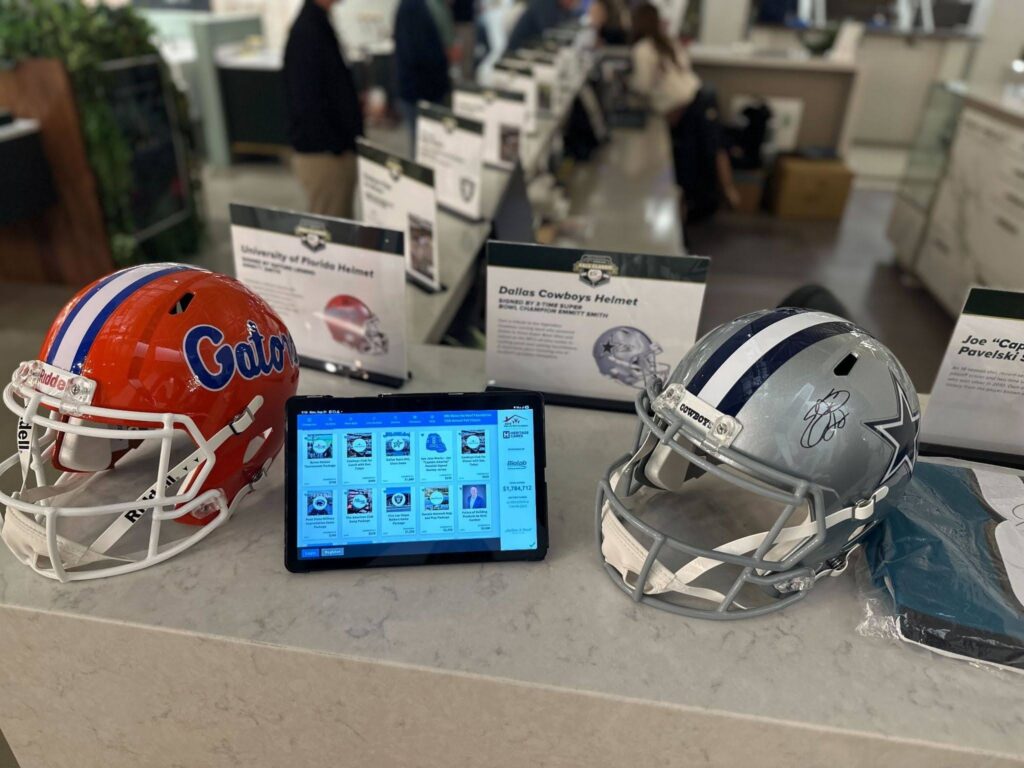
- Making shared bidding tablets easy to find.
- Positioning trained volunteers or on-site support near the auction area.
- Giving guests a clear place to go when they have questions.
- Walking donors through their first bid if they need help getting started.
The goal is not to assume that older donors will struggle with mobile bidding. It is to make sure that any guest who needs assistance can get it quickly without feeling like technology is standing between them and supporting your mission.
AES can provide event equipment and on-site support to help create that experience, giving nonprofits the benefits of digital bidding while still providing hands-on guidance where it matters.
How Mobile Bidding Creates a More Flexible Auction Experience
Mobile bidding creates opportunities to make participation more flexible throughout the event. Guests can browse auction items, bid from their seats, receive notifications when they are outbid, and stay connected to the auction from wherever they are. Mobile bidding can be especially valuable when:
- Your donors are already comfortable using their smartphones throughout the event.
- You have a large auction catalog that would be difficult for every guest to browse physically.
- You want to open bidding before the event begins.
- Real-time outbid notifications are an important part of your strategy.
- You want donors to continue bidding while eating dinner, networking or enjoying the program.
- Your fundraising strategy includes online charity auction participation beyond the people standing in the auction area.
Mobile bidding also does not have to mean that every donor is left completely on their own with a smartphone.
AES can provide event equipment and on-site support to help guests who need assistance. Shared tablets give donors another way to access the auction, while trained team members and volunteers can help answer bidding questions in real time.
The result? A robust digital bidding experience without assuming every guest has the same level of technical confidence.
Go Beyond Bidding For Digital-First Experiences
If your donors are already comfortable engaging on their phones, mobile bidding can do more than make it easier to place a bid. It can become part of the broader event experience.
AES’s interactive Digital Program gives guests access to your organization’s event content directly within the mobile bidding experience. Your program can include formatted text, images, videos and separate tabs, giving donors an easy way to stay connected to your mission and event information without carrying a printed booklet.
The auction can remain front and center while the Digital Program is available through the main menu, allowing guests to move naturally between bidding and engaging with the rest of your event content.
For nonprofits with a more tech-savvy or digitally engaged audience, that creates opportunities to:
- Keep important event information easy to access throughout the night
- Share mission-focused images, videos and storytelling alongside the fundraiser
- Give sponsors additional digital visibility
- Reduce the number of printed programs needed
- Keep more of the event experience in one place on a guest’s device
It is another reason to let your audience guide your bidding strategy. If your donors are already comfortable engaging digitally, choosing mobile bidding can give them a more connected event experience — not just a different way to bid.
Have a Multi-Generational Audience? Choose One Experience and Remove the Friction
A mixed-age donor base does not require multiple bidding experiences. Instead, create one consistent mobile bidding experience and then build additional support around the guests most likely to need help.
Make Mobile Bidding Easy to Navigate
Make mobile bidding easier by:
- Communicating ahead of time that bidding will take place digitally.
- Encouraging guests to complete registration before event night when possible.
- Providing clear, simple instructions at check-in and around the auction.
- Making shared bidding tablets easy to find.
- Positioning trained volunteers or on-site support near the auction area.
- Teaching volunteers how bidding, notifications, and checkout work from the donor’s perspective.
Your goal should be to prevent a guest from abandoning a bid simply because they are unsure what to click next.
Train Volunteers Around the Bidding Experience
Your volunteers should understand more than the administrative side of the auction. They should be able to experience the process exactly as a donor will.
For a mobile bidding event, volunteers should practice registering, finding an item, placing a bid, understanding an outbid notification and locating checkout information before guests arrive.
Run through common scenarios as a team before the event begins:
“I can’t find the item I want to bid on.”
“How much do I need to bid?”
“I don’t have my phone with me.”
“How do I know if I won?”
“Where do I pay and pick up my item?”
A volunteer who can confidently answer those questions helps protect the guest experience — and keeps small moments of confusion from becoming barriers to participation. When you partner with AES, your Customer Success Manager will be on-site to help from start to finish.
Design Your Mobile Bidding Experience Around Your Donors
There is no single digital experience that will feel equally intuitive to every guest. Instead of assuming what donors need based on age, look for the specific points where they may need additional support.
| Potential Barrier | How to Reduce Friction |
| Registration | Encourage guests to register ahead of time and provide support at check-in. |
| Finding Auction Items | Organize the digital catalog clearly and show guests how to search or browse. |
| Placing a First Bid | Make simple instructions available and have volunteers ready to walk guests through the process. |
| Outbid Notifications | Explain how notifications work so donors know when and how to respond. |
| Device Comfort | Provide shared tablets and hands-on assistance for guests who need another option. |
| Connectivity | Confirm reliable connectivity and event technology before guests arrive. |
| Checkout | Clearly communicate how winners pay and collect their items. |
If you’re still unsure where your audience may need help, look backward before looking forward.
Review what worked at your previous events. Ask your development team what questions or complaints they hear from donors. Talk to committee members who know longtime supporters personally. Look at bidder participation and auction results from prior years.
Your donors will usually show you where additional guidance can make the experience easier.
Don’t Adopt Technology Just Because It’s Available
Mobile bidding can be an excellent tool. But adding technology simply because it feels more modern is not a fundraising strategy.
The features you use should solve real problems for your organization and make participation easier for donors. That may mean prioritizing simple registration, easy catalog navigation, real-time notifications, accessible support, or a smoother checkout experience rather than enabling every available feature.
The right question is not:
How much technology can we add?
It is:
How can technology make it easier for our donors to participate?
That shift keeps the focus where it belongs: on engagement, donor experience and your fundraising goals.
How AES Helps Nonprofits Build the Right Bidding Experience
AES has supported nonprofit auctions since 1989, giving our team experience across evolving technology, changing donor expectations, and many different event formats.
Our team helps nonprofits create a mobile bidding experience that works for their specific audience rather than expecting every donor to interact with technology in exactly the same way.
That can include mobile bidding software, shared tablets, event equipment, volunteer preparation, and professional on-site support designed to keep guests engaged and the fundraiser moving smoothly.
The objective is not simply to introduce more technology. It is to use the right technology and support to make bidding easier, reduce friction, and give more donors the confidence to participate.
Ready to Find the Right Bidding Format for Your Donors?
Your auction technology should make it easier for supporters to give.
Schedule a demo with AES to explore mobile bidding, event support, and the tools available to create an easier digital experience for your donors.
Frequently Asked Questions
What if some of our donors are not comfortable with mobile bidding?
Mobile bidding can still work well for a multi-generational audience when the right support is available. Clear instructions, shared tablets, trained volunteers, and on-site assistance can help guests who need extra guidance participate confidently without creating a separate bidding experience.
Is mobile bidding difficult for older donors?
Not necessarily. Age is not always a reliable indicator of technology comfort. For guests who do need assistance, clear instructions, shared tablets, trained volunteers, and on-site support can make mobile bidding much easier to navigate.
How can we make mobile bidding easier for less tech-savvy donors?
Start with clear communication before the event, simple registration instructions, shared tablets, trained volunteers, and visible on-site support. Guests who need help should have an easy way to ask questions or be guided through their first bid without slowing down the rest of the event experience.
How do we know if our donors are ready for mobile bidding?
Look at your donors’ technology comfort, feedback from previous events, smartphone and online payment use, auction size, venue connectivity, volunteer capacity, and the amount of on-site support available. AES can help you plan a mobile bidding experience around those needs rather than assuming every guest will require the same level of support.